
‘For was it ever known that any Nobility stuck so firm to their Religion, so that I may compare you to a Rock that is not to be moved?’
[An untitled, printed pamphlet by Elinor James c.1645-1781), November 1688. National Archives
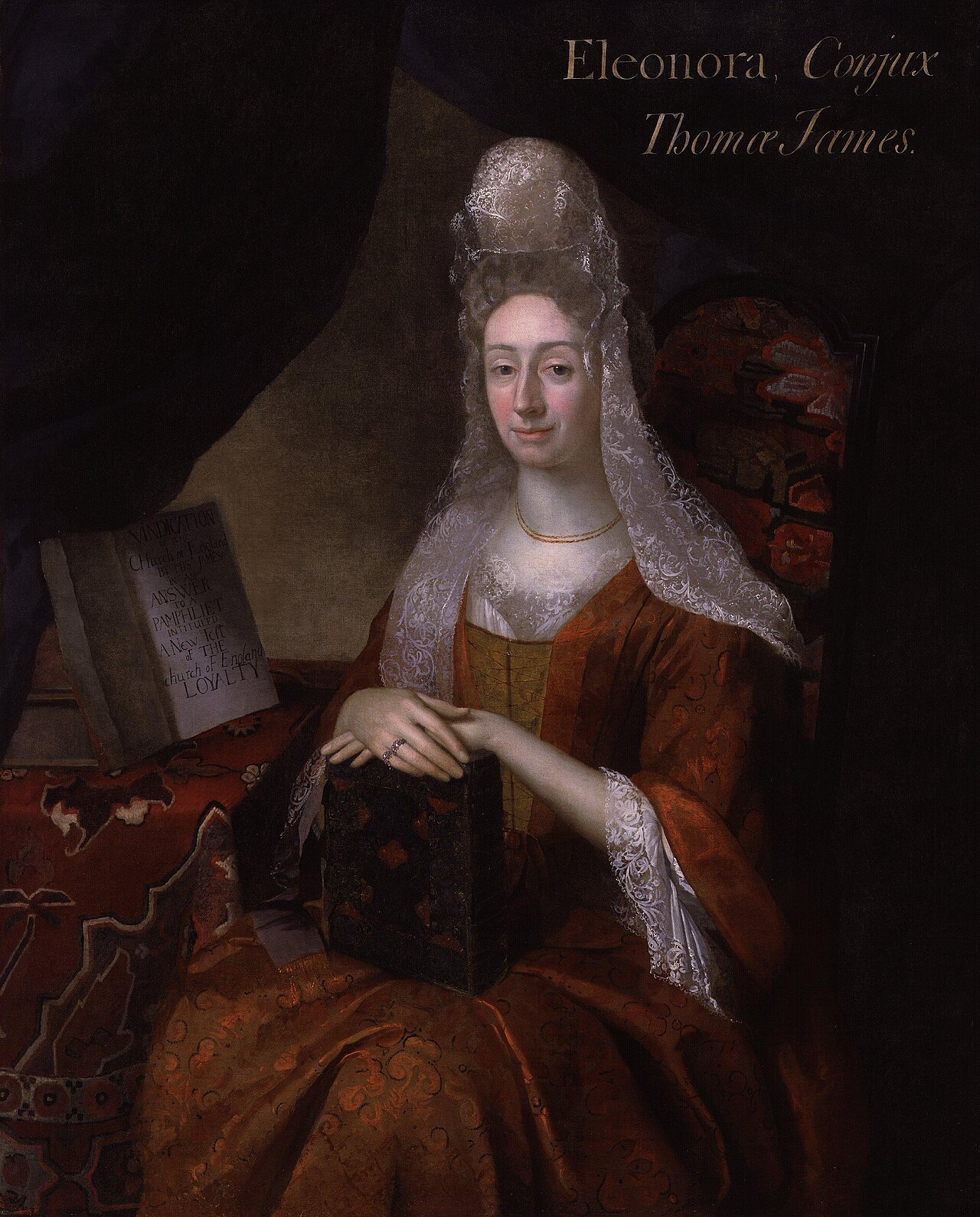
Elinor James (1644–1719) was a formidable early modern printer, author, and political firebrand whose prolific output earned her the nickname the “London City Godmother.”
One of the few women of her era to publish under her own name, she produced over ninety pamphlets, many of them petitions directed at monarchs, Parliament, and religious authorities.
Married young to printer Thomas James, she raised five children before becoming an active partner in the print shop and later inheriting the business.
Her writing shows deep knowledge of the trade and a fierce commitment to Anglicanism, often challenging the Catholicism of James II and engaging with the political crises of the 1680s.
Confident and outspoken, she frequently invoked her experience as a mother to assert her position as a moral voice in national debates. Her legacy includes a major gift of 3,000 books to Sion College, cementing her influence on Anglican intellectual life.
Teaching Themes
Glorious Revolution: social commentary and political opposition.
Print as power: Explore how pamphlets and petitions shaped public debate and how access to print changed who could speak.
Religion and politics: Teach the Anglican–Catholic tensions of the 1680s through her outspoken petitions.
Everyday people in big events: Show how individuals outside Parliament participated in the Glorious Revolution.
Women’s roles: Social commentary, business ownership, writer, and participation in rebellion.
Using personal experience as authority: Discuss how she used motherhood to claim moral and political credibility.
Period & Place
National Curriculum Link
The development of Church, state and society in Britain 1509-1745
Exam Specification Links
GCSE OCR A – A2:2 Monarchy and Democracy in Britain c.1000 – 2014
A Level AQA – 1D Stuart Britain and the Crisis of Monarchy, 1603–1702.
Sources
A volume of tracts in the collection of the Old Library at Magdalene College contains three of Elinor James’ petitions, all of which demonstrate her outspoken style and her confidence discussing a wide range of religious political topics. In the pamphlets, we see that James saw herself as a significant contributor to the public conversations taking place in the late 1680s and that her femininity gave her valuable and unique insight.
Scholarship
McDowell, P. (1998). The Women of Grub Street: Press, Politics, and Gender in the London Literary Marketplace 1678-1730. Oxford: Clarendon Press.
McDowell, P. (2007). ‘”On the Behalf of the Printers”: A Late Stuart Printer-Author and Her Causes’. In: S. Alcorn Baron, E.N. Lindquist and E.F. Shevlin, eds., Agent of Change: Print Culture Studies after Elizabeth L. Eisenstein. Boston: University of Massachusetts Press