
We’re thrilled to welcome eminent historian Emma Griffin as a patron of End Sexism in Schools. We recently sat down with Emma to learn more about her interests and motivations for supporting our cause to end sexism in schools.

What first inspired your love for the subject?
Just before I chose my A-levels, I saw some sixth formers discussing the situation in the Middle East and using what they had learned in their A-Level history about the formation of Israel in order to advance their arguments.
I was really fascinated that it was possible to use evidence from the past to try and understand the present, and this prompted me to pick A-level history myself.
I don’t think I’ve ever used what I research to discuss contemporary problems in that way, but I do see history as helping us to understand the human condition and that’s why the subject has held such enduring interest for me.
Was there a particular moment when you became aware of the lack of female representation in many historical narratives?
When I was an undergraduate in the 1990s, women’s history was an established part of the university curriculum, but it tended to sit apart, in its own silo.
At the time, I didn’t see this as a problem, as the courses were there for those interested in women’s history. It was only much later that I realised that we need more than a strand of courses about women for those who are interested, and that we need to incorporate the female experience into our broader historical narrative.
What are the biggest difficulties as a historian to access women’s voices and how do you try to overcome these?
For the period and place that I study, Britain in the c18 and c19 centuries, women had much less access to pen, paper and the mechanisms of power within which most historical documents were produced.
It’s a problem that a great many historians encounter, and there is no easy answer.
Initially, I got around the shortage of women’s voices, by reading closely at what the male-authored sources wrote about mothers/sisters/wives etc. In another project, I moved my chronology forward to the late c19 and early c20 – because female-authored sources for this period did exist.
The writing of all history requires a lot of problem-solving and some pragmatic compromises, and in many ways the gender problem is no different.
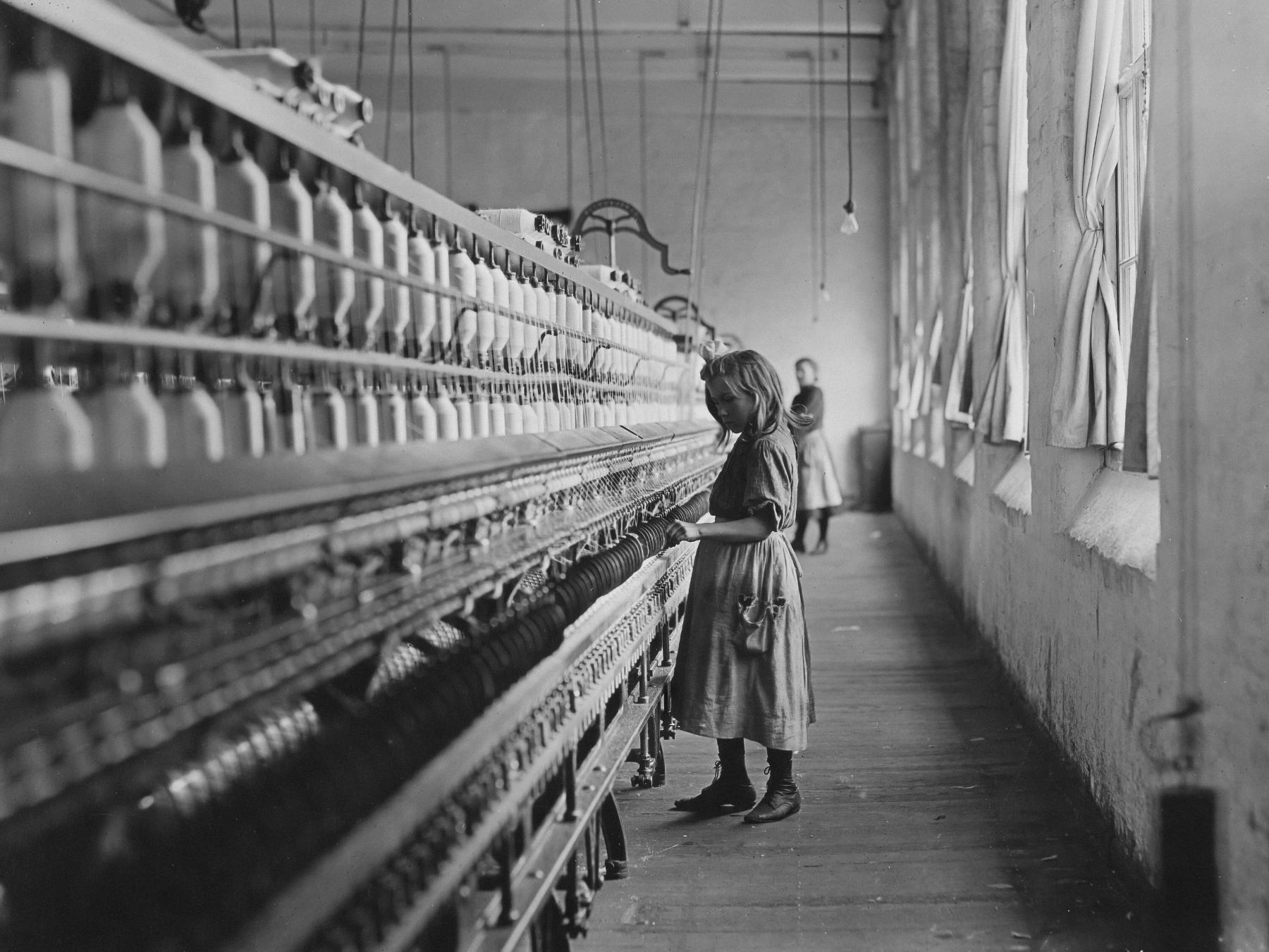
Your 2013 book Liberty’s Dawn: A People’s History of the Industrial Revolution has been really inspiring for teachers seeking to bring working-class voices to the classroom – how did you begin the research for this project and what was your most exciting discovery?
I started to find working-class autobiographies while studying for my PhD. At that time, I couldn’t really make use of them for my research, but I filed away in my mind that they existed and turned to them some years later when my PhD was complete.
I initially used them to help teach British History to undergraduates. So many of the autobiographies are fascinating in their own right, but a particular high point was finding an autobiography by John Lincoln in the Norfolk record office.
I happened to have got a job at UEA and was living in Norwich, so one quiet day I decided to go to the record office and look through the locally available autobiographies. This one by John Lincoln was a particular gem. It was unpublished and entirely unknown and unused by historians. He also described fathering children out of wedlock, marital unhappiness, and infant death – all very unusual themes for men at this time.
Having worked on TV and radio as a writer and presenter, how important a role do you think such public history plays in society?
I think every society has a desire, maybe even a need, to understand its own past. We need history of all kinds, produced by all sorts of people, for many different audiences. I am very much of the view that we need multiple approaches for different audiences and that there should be no hierarchy in who gets to write about the past.
What was your favourite aspect of being President of the Royal Historical Society 2020-2024?
Unusually in the historical/academic world, the RHS has some money – not a huge amount, but enough to support all sorts of different historians and history.
As President, I was able to work with a small team of other, dedicated historians to agree funding priorities and how best to support both individual historians, and the discipline as a whole. It felt very worthwhile and I really enjoyed it.
What do you think are the biggest challenges facing academic History now?
It’s a difficult time for the university sector. The job security that existed when I entered the profession in the early 2000s, no longer exists, and the number of jobs available has also sharply contracted. This makes it much harder for the next generation of younger historians to get a foothold in the profession, which is a real problem for the discipline.
We need new people, asking new questions, and trialling new methods to keep the subject alive.
What inspired you to support our campaign as a patron for End Sexism in Schools?
We do teach a lot about women at universities, so I was really surprised to read about the under-representation of women in the schools History Curriculum and wanted to support efforts to tackle that absence.
Was there anything in the ESIS History report that you found particularly surprising?
I think the fact that there are so many History lessons where women are entirely absent was quite a shock.
How do we encourage history teachers to incorporate more women into their teaching?
This process must be governed by the outcomes of the Curriculum and Assessment Review and by what exam boards then specify. However, the End Sexism in Schools report ‘Mapping Women onto the National Curriculum’ provides a wealth of material for teachers interested in incorporating more women into their lessons.