
Summary
Women were inventors of the novel. From 11th century Japan to 17th century Europe, they pioneered its defining features of psychological interiority, emotional realism and a focus on private life, yet women have been systematically erased from its history. This erasure is still reflected in UK classrooms today, where only 5% of GCSE students read a female-authored text.
Figures like Madame de Lafayette, whose 1678 La Princesse de Clèves is considered the first modern psychological novel and England’s first professional female writer, Aphra Behn, established the form decades before male writers like Defoe and Richardson. When men entered the genre in the 18th century, they received credit for its invention – a misattribution that persisted through influential criticism like Ian Watt’s The Rise of the Novel (1957), which excluded women despite Watt himself acknowledging that they wrote the majority of 18th-century novels.
Women wrote under anonymity, using male pen names and self-deprecating disclaimers, not from modesty but as survival strategies in a hostile literary culture. Their domestic themes were not trivial. Novels about marriage, inheritance and female interiority were, in effect, political manifestos.
This article argues that the current national curriculum reflects this inherited distortion rather than historical reality and calls for a rebalancing – one that recognises women not as guests in literary history, but as its architects.
The Stolen Genre: how women invented the novel and then disappeared from its history
Created, written and enjoyed by women, novels were the first truly female space in literature. Unlike the epic poems and classical texts that came before, novels focused on psychological interiority, private life and emotional realism and were written in the vernacular.
Yet the literary canon erased women from the history they created, and our education system continues to teach that lie.
Women created and shaped an important literary genre, were ridiculed for it, were erased from its history and remain invisible nearly 400 years later.
Women invent the novel (17th century)
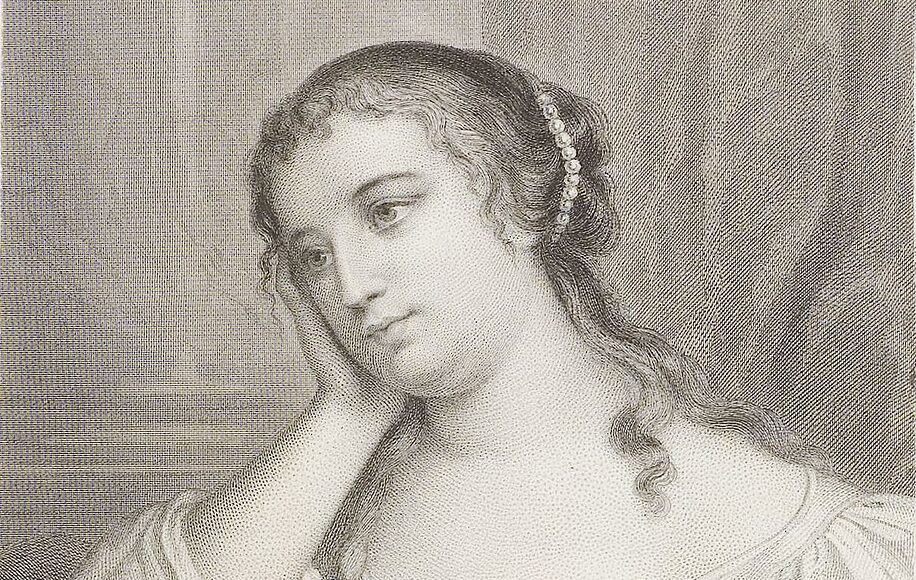
In 1678 an anonymous writer published La Princesse de Clèves, set in Henri II’s royal French court, but everyone knew it was by Madame de Lafayette. It is considered the first modern, psychological novel. Lafayette pioneered the idea that a character’s interior moral conflict could be the centre of a story. No adventure. No spectacle. Just a woman’s mind wrestling with desire and duty. Revolutionary and controversial in equal measure.
Writing during a similar period, Aphra Behn (1640–1689), the first professional female writer in England, is also attributed as an inventor of the modern novel. “All women together ought to let flowers fall upon the tomb of Aphra Behn”, writes Virginia Woolf in her essay A Room of One’s Own. Behn wrote for money, wrote about sex, and wrote herself into history but was written out of the canon due to her “great promiscuity” and controversy.
These women, alongside others like Elizabeth Singer Rowe (1674–1737), Mary Astell (1666–1731) and Charlotte Lennox (1729–1804), created and fought for a literary form that centred on women’s experiences. Rowe’s work transformed outward struggle into interior moral self-control, a plot trajectory that would later appear in Richardson’s Clarissa and Burney’s Cecilia (though Richardson would receive far more recognition for the techniques Rowe had pioneered).
Astell, in her A Serious Proposal to the Ladies (1694), explicitly argued that women were socially “alienated” and needed education and intellectual space, writing at a time when women were seen as “the weaker vessel” whose “main business in life” precluded intellectual seriousness.
The novel is dismissed
At this time the novel was routinely dismissed as frivolous, unimportant, overly emotional and not serious literature. Female authors understood this perception and the relative safety that came with this dismissal. Many participated in this illusion by stating in their prefaces and commentaries the unimportance of their own writing. When self-deprecation proved insufficient protection, women published anonymously or adopted male pen names.
Behn was brave to write under her own name, in her own voice, but her personal life and plotlines served to have her erased from literary history until feminist archaeologists excavated her memory in the 20th century. Her contemporary male critics, like Alexander Pope, mocked her publicly: “The stage how loosely does Astrea tread, Who fairly puts all characters to bed!” Critics labelled her work as morally depraved and scandalous, while male writers explored similar themes without facing the same condemnation.
Lafayette faced different but equally revealing attacks. When La Princesse de Clèves was published, male critics could not believe that a woman had written it. They insisted that the Duc de La Rochefoucauld, whose friendship with Lafayette was well known, must have “mis la main” (put his hand to it), and that perhaps Segrais had worked on it as well. There was a fundamental refusal to admit that a woman had fully written this text.
Beyond questions of authorship, the novel sparked what became known as the Querelle de La Princesse de Clèves, a literary scandal in which male critics argued obsessively over whether a woman would really confess her own (sexual) desire and go against her duty. The controversy was the 17th-century equivalent of Ben Shapiro arguing that Cardi B’s 2020 sex-positive song WAP is unrealistic and dangerous because his wife rarely gets aroused. Another example of men’s ignorance of women being used to distort the truth about women.
Perhaps what critics feared about the novel was women imagining alternatives to their prescribed lives. Novels invited women to name their dissatisfaction, to question marriage as an institution, to imagine desire as legitimate and autonomous. This was a political education, the beginning of a consciousness-raising that threatened existing power structures.
When male critics called novels “corrupting” they were correct: they had the power to change women’s minds and threaten the patriarchal order.
This threat was mitigated by ridiculing the contents, deeming it nonsense and non-literary. That is until men started to write in the genre they had diminished.
“Women have served all these centuries as looking glasses possessing the magic and delicious power of reflecting the figure of man at twice its natural size.” Virginia Woolf in A Room of One’s Own
The novel’s great theft (18th century)
Novels were not considered literary until male writers like Defoe (1719) and Richardson (1740) published their work and were erroneously credited with the invention of the novel, misinformation that would persist until the late 20th century. Today’s readers may have heard of Robinson Crusoe’s adventures, but few know that women had been writing novels for 40 years before Defoe put pen to paper.
1000 Library Magazine observed in their 2025 article “How fiction sparked outrage in the 18th century”, that “literature in the early 18th century wasn’t quite the same as we might know it today […] writers like Daniel Defoe and Samuel Richardson hadn’t exactly invented a new medium, but they had popularised it”. What this narrative obscures is that women had refined the form – men simply received the credit.
Henry Fielding called his writing “comic epics”, dressing up his novels in elitist classical tradition. In France men wrote “le roman personnel”, the novel of masculine existential suffering in which women became objects – evil, dead or married by the end. The scaffolding of these works was feminine but, once clad by a patriarchal builder, these texts were no longer deemed frivolous but important.
None of this means that men did not contribute profoundly to the development of the novel. Defoe, Richardson and Fielding mattered, but their literary achievements do not include creation of the genre. What started as a spark of female emancipation was quickly subverted to its opposite: the defining of women as “other”, as tools in narratives, as having only two options in life: marriage or death. With texts like Of Mice and Men (written by a man and featuring one unnamed woman) appearing on GCSE curricula for decades, it seems the male-centric form of the novel is still the one favoured and circulated today.
Women writing under cover
Women’s fictional writing couldn’t be ignored however and gained considerable popularity in the 19th century. Jane Austen published Pride and Prejudice in 1813, Emily Brontë published Wuthering Heights in 1847 and George Eliot published Middlemarch in 1871–2. It should be noted however that both Brontë and George Eliot used male/androgynous pen names to publish these works, evidence of the hostile reception for women’s writing even two centuries after women had invented the genre.
Frances Burney, who published Evelina in 1778, did so anonymously and later wrote that, “I had no intention of appearing in print”. This disclaimer, like so many others written by women authors, served as a form of self-preservation, an early version of what we might now call a trigger warning. The trigger in this context being women speaking their minds, which has historically been very upsetting for some.
The themes of these novels remained consistent with those of their 17th-century predecessors – interiority, domesticity and women’s lives. Domesticity and private life were widely considered to be feminine domains, while politics, war and public life were deemed masculine. This was a dichotomy as what all these women achieved, through writing about the private life, focusing on the economics of marriage and presenting marriage as another form of bondage, was deeply political work. They were, intentionally or not, fighting for the rights of half the population.
The novel made visible what political theory ignored: marriage contracts, inheritance law, dowries, reputation, sexual double-standards, and women’s lack of legal identity.Lafayette, in her early novella La Princesse de Montpensier, used marriage to portray France’s civil war during the Wars of Religion. Disguised as mere romance and love stories, Lafayette was able to present a sophisticated, nuanced portrayal of France’s political climate. Had she written openly about these political matters, her work might never have been published and she would have faced public condemnation.
Similarly, Austen’s novels, often dismissed as merely domestic, exposed how marriage functioned as an economic transaction and how women’s lack of legal rights shaped every choice they made. George Eliot’s Middlemarch centred women’s frustration, interrogated marriage as entrapment and treated women’s unrealised potential as tragedy. These were not trivial domestic tales; they were political manifestos written in a language that could evade censorship and appeal to the masses.
Canon formation: how women were retroactively erased
Literary histories like Ian Watt’s The Rise of the Novel (1957) are (in)famous for focusing on male figures (Defoe, Richardson, Fielding) and ignoring women’s contributions, despite his own admission that, “the majority of 18th century novels were written by women”.
Watts admits that women wrote the majority of novels, but then excludes them anyway.
It was not until the late 1970s and 1980s that feminist scholars began large-scale recovery projects focused specifically on restoring women writers to literary history. Scholars such as Dale Spender, Jane Spencer, Janet Todd and Elaine Showalter reframed the novel not as a male invention but as a form deeply shaped by women’s authorship and readership.
This perpetuated falsehood exposes canon-making as ideological and not objective, and this injustice is still reflected in our education system and national curriculum. Exam boards inherited a canon already shaped by decades of male-centred literary history and have done very little to correct it. When the major exam boards (AQA and OCR) were created in the late 1990s they chose predominantly male authors. Decades later we are in the same unbalanced predicament.
If the modern novel was shaped and popularised by women, then a curriculum dominated by male novelists is not neutral tradition, it is historical distortion.
Conclusion
Somewhere between Lafayette’s revolutionary text and today’s classrooms, we lost the plot. Four hundred years after women invented the novel 95% of GCSE students in England read only male novelists. Ian Watt admitted that “the majority of 18th-century novels were actually written by women”, and then wrote a canonical history excluding them. Exam boards inherited this distorted canon and continue to perpetuate it decades later.
You don’t need to be a woman in STEM to know that a 95/5 split is not balanced. Every year it continues, another generation learns that women’s voices are optional. We teach students that what women created, men perfected. That what women pioneered, men legitimised, that women are guests of literature, rather than its architects.
The novel gave women a room of their own. It’s time our classrooms did the same.